VIVE Mars CamTrack
Buy
Close Modal×Register for Interest
MoonShine Studio, founded in 2012, is a renowned visual effects (VFX) company based in Taiwan. At the heart of the studio lies a simple yet powerful belief: "Bringing diverse talents together creates meaningful and impactful work." With this vision, Moonshine Studio has assembled a team of directors, designers, animators, and developers to produce boundary-pushing creative content. Moonshine’s expertise spans animation, film, and television visual effects, interactive technology, and exhibition design.
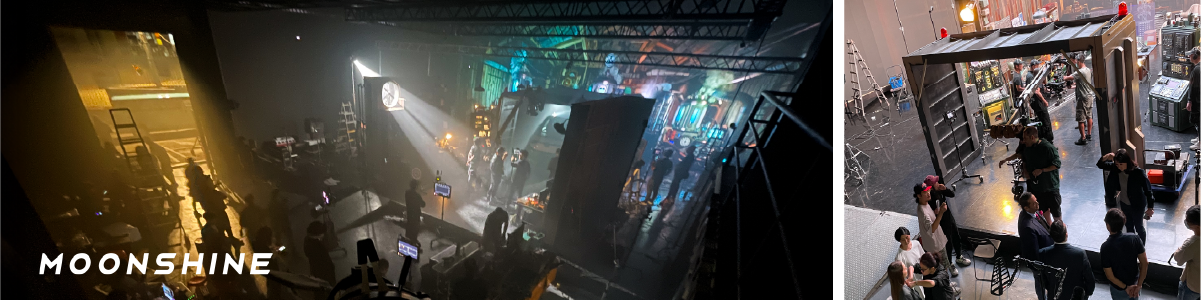
Since 2019, the studio has also ventured deeply into the realm of virtual production, with a strong focus on innovations in virtual reality photography, AI-generated content, and motion capture. Its portfolio includes some of Taiwan’s most iconic productions, such as the acclaimed TV dramas Gold Leaf and Wave Makers, as well as the horror blockbuster Incantation. Moonshine’s groundbreaking work has earned multiple nominations for Best Visual Effects at Taiwan’s prestigious Golden Horse Awards.
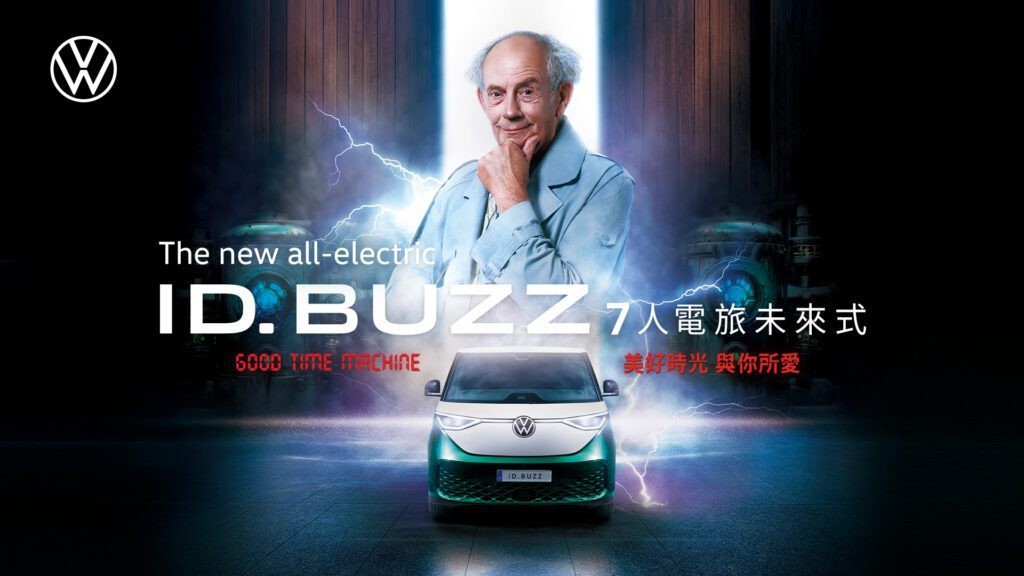
Beyond film and television, Moonshine Studio has actively applied virtual production techniques to advertising. One standout project is their collaboration with Volkswagen Group Taiwan Co. Ltd. on the ID. Buzz campaign, which cleverly blends elements from the iconic film Back to the Future. The commercial features Christopher Lloyd, the lead actor from the original film, to create a magical and nostalgic journey. In just ten days, Moonshine Studio rapidly built virtual sets, composited scenes in real time, and brought an iconic character back to the screen through time-travel magic. The technology used behind the scenes served not merely as a cost-saving tool—it was the driving force that turned bold creative ideas into reality and elevated the overall storytelling experience.
The interview captures some of the lighthearted moments shared with the legendary Hollywood actor Christopher Lloyd during the shoot, highlighting the unforgettable sparks that flew between the team and the actor throughout the collaboration. From technical execution to creative imagination, this interview offers a rare glimpse into how Moonshine brought magical moments to life through a seamless blend of the virtual and the real.
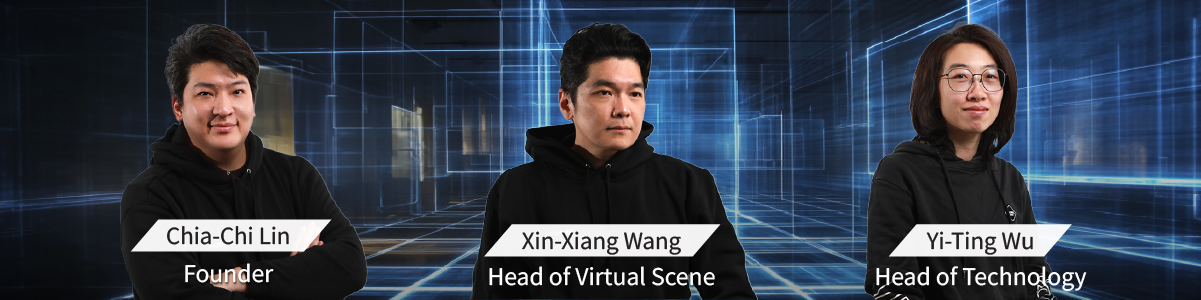
(From left to right) Chia-Chi Lin, founder, Xin-Xiang Wang, Head of Virtual Scene, Yi-Ting Wu, Head of Technology.
🚀 VIVE MARS: The Volkswagen “VW Bulli Commercial Vehicles Taiwan ID. Buzz” commercial incorporates classic elements from the film Back to the Future. What led you to choose virtual production for this project?
Xin-Xiang Wang: The client wanted this commercial to convey a cinematic narrative feel and visual standards. Our client, originally trained in film studies, now works at Volkswagen but still harbors a passion for cinema. When creating the ad for this car model, they envisioned collaborating with the iconic Dr. Brown from Back to the Future through Volkswagen’s vehicle. Surprisingly, Christopher Lloyd, who played Dr. Brown in Back to the Future, accepted the client’s invitation, so the entire shoot ended up happening at Moonshine Studio’s virtual studio.
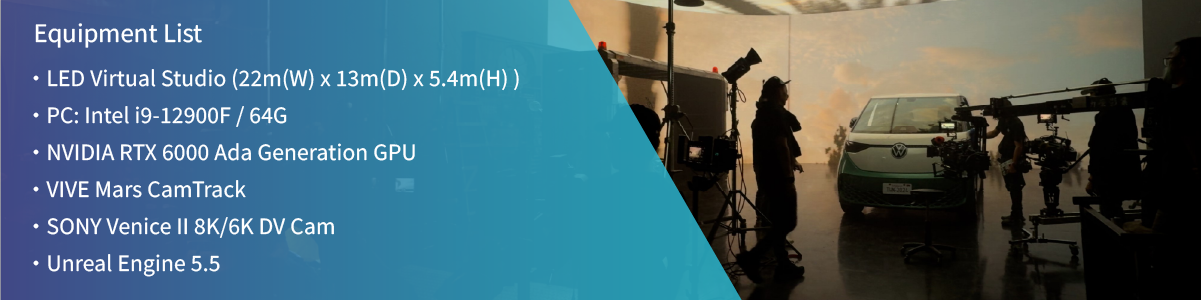
The decision to use virtual production was mainly driven by considerations of locations and actors. The commercial features scenes in a warehouse, outdoor streets, new and vintage cars, as well as both young and older Dr. Brown. Filming all these on location would have been extremely challenging and time-consuming. Moreover, with Christopher Lloyd being older, it was not feasible for him to endure long outdoor shoots. Given these production constraints, we chose to complete the entire shoot in a virtual studio. The tight schedule demanded a highly flexible approach that allowed rapid scene changes and enabled us to finish filming in a very short time.
🔗 Click here to watch the full commercial.
🚀 VIVE MARS: There was much secrecy when Christopher Lloyd came to Taiwan. Were there any interesting behind-the-scenes moments that you’d like to share with us?
Xin-Xiang Wang: The entire shoot was highly confidential; we only found out about a week before filming that the actor was Christopher Lloyd. There hadn’t been a single leak, so when we heard, most of us couldn’t believe it was real. Honestly, some people even said they “came back to life” from a long phase of creative burnout at that moment.
The production team handled most of the logistics around his visit to Taiwan, while we focused on making sure everything on the shoot went smoothly. Since it was such a rare opportunity, a lot of directors and industry friends took the chance to bring their personal collections, like collectible Dr. Brown action figures or Back to the Future model cars. I remember his waiting room being packed with everyone’s collections, and he was so patient and kind, signing everything one by one.
What left the deepest impression on me was the charisma he brought as a seasoned actor. Most of the time, he looked like an ordinary elderly person. But the moment the camera rolled and someone yelled “Action,” he would instantly switch into character, which was honestly breathtaking. Everyone on set said it felt like we were watching a movie being made—whether you were seeing it live or just through behind-the-scenes footage, it was truly moving.
🚀 VIVE MARS: This commercial was completed—from shooting to post-production—in just ten days. How did you arrange the schedule? What key role did virtual production play in making that possible that couldn’t be done with traditional filming?
Xin-Xiang Wang: From shooting to post-production, we had just ten days to complete the entire project, relying heavily on virtual production technology to make it possible. We’ve built up a solid stock library over time, so once the brief came in, we were able to quickly pull together the right scenes and materials from our archives and then fine-tune them based on the needs of the specific shoot. It really saved us a lot of preparation.
The biggest advantage of virtual production is its efficiency. As I mentioned earlier, we were on a tight schedule. With VP, we could switch scenes quickly without the hassle of traveling to different locations. That flexibility and speed were key to making this happen in such a short time.
Yi-Ting Wu: In the virtual studio, we can cover multiple scenes in just a single day—that’s something traditional shoots cannot match. On top of that, filming a commercial like this for Volkswagen indoors means the actors can really focus on their performance without worrying about any unexpected incidents that might happen on the road.
🚀 VIVE MARS: How did collaboration between different departments differ when working in a virtual production environment? During the production process, did you encounter any technical or collaborative challenges? How did your team overcome them?
Xin-Xiang Wang: Of course, there were plenty of challenges. Especially the art director for this commercial, Chih-Ta Kuo, is part of one of the top art teams in Taiwan and holds extremely high standards when it comes to detail.
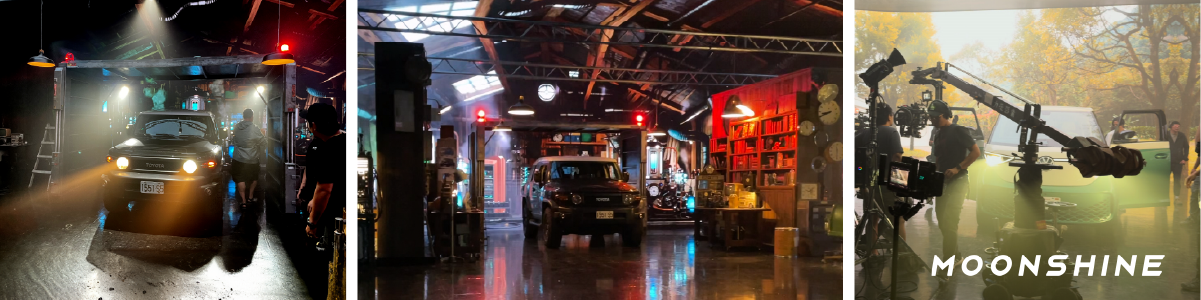
The biggest challenge was making sure the virtual backgrounds matched seamlessly with the physical props. To achieve that, we used HDR (High Dynamic Range) technology to ensure the lighting and textures aligned perfectly.
Mr. Kuo’s team also drew from their rich experience with live action sets to advise us on how to make the placement of virtual elements feel more natural and real. For example, they’d point out that a piece of glass in the scene shouldn’t just look like normal glass— it should feel aged, maybe with rain streaks running down. The art team offered many detailed suggestions that really helped make the scenes feel more authentic.
Yi-Ting Wu: For this shoot, we specifically used HDR, which was a technique we hadn’t tried before. In the early stages, we spent a lot of time going back and forth with the art director to make sure everything in the process was accurate. Extensive testing was conducted to ensure the actual shoot went smoothly.
🚀 VIVE MARS: Were there any memorable or interesting behind-the-scenes moments during the shoot that you’d like to share with us?
Xin-Xiang Wang: There was a memorable little incident on set. The original prop was an antique chair, but when Christopher Lloyd sat down, he almost slipped off. At that moment, I’m pretty sure everyone on set had a mental “Oh no!” running through their minds.
After seeing that, we quickly grabbed a studio office chair—a computer chair Moonshine Studio bought early on for just 3,000 NT dollars. Surprisingly, Christopher Lloyd loved it, and he ended up using that chair for the entire shoot. It even made it into the final shots! It wasn’t part of the original plan, but his comfort and satisfaction mattered most.
🚀 VIVE MARS: Please talk about your experience with VIVE MARS during the shot. Did any of its functions help solve challenges you encountered during filming?
Yi-Ting Wu:
Most cinematographers prefer not to use wired equipment during shoots, and VIVE Mars offers Bluetooth wireless connectivity, which is a great help on set. Additionally, the tracker itself is very lightweight, making it faster to set up and take down compared to other tracking systems, thereby improving on-set shooting efficiency.
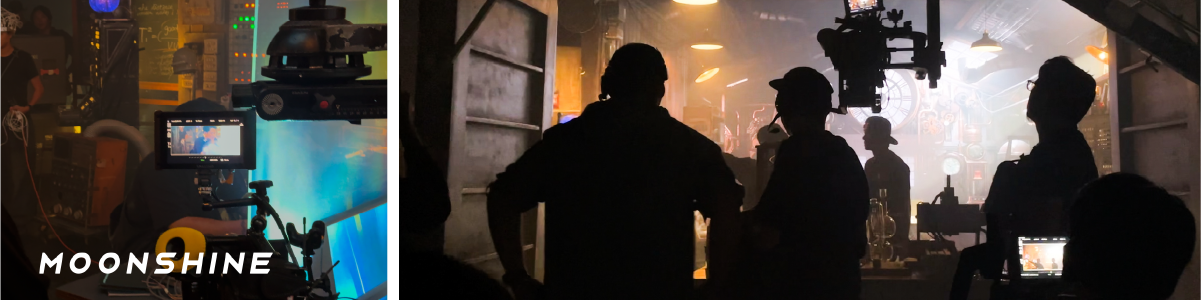
Xin-Xiang Wang: One particularly interesting aspect of this shoot was that we used quite a few physical props on set to make the set feel more immersive, and it worked to our advantage. We were using HTC’s VIVE Mars system, which includes four base stations to create a tracking space. We cleverly concealed these four base stations within the set, making them look like part of the lab equipment. Their high-tech appearance blended seamlessly into the environment, so the audience could hardly tell they were there for technical purposes.
🚀 VIVE MARS: As the pioneer in virtual production in Taiwan, what are your thoughts on the future of virtual production? Does Moonshine Studio have any plans or directions you'd like to explore in this field going forward?
Xin-Xiang Wang: AI has had a significant impact across many industries. Through our own experimentation with AI for visual content creation, we've found that one of the main areas where AI still falls short is “consistency”. For example, when generating animations of a smartphone, the number of camera lenses might vary from three to four between frames, making it difficult to maintain visual stability and accuracy.
However, if we reverse the step—shooting physical products with real cameras inside a virtual studio—we can preserve accurate lighting, materials, and product details. By combining this with AI-generated backgrounds or AI-assisted motion effects, we’re able to retain the true appearance of the product while also improving production efficiency.
In the past, virtual production typically relied on photos, 3D models, or live-action footage for LED backgrounds. Now, we’ve added another approach: using AI to generate images or videos as part of the background. This not only speeds up the overall production process but is also a direction we plan to continue pursuing in the future.
🚀 VIVE MARS: For young creators interested in virtual production or animation, do you have any advice or words of encouragement you’d like to share?
Xin-Xiang Wang: For me, it’s incredibly exciting to give the audience an experience that feels just like watching a movie in the real world—except it’s all happening within a virtual production set. I’ve loved the world of visual storytelling since I was a kid, so being able to work on the Volkswagen commercial and collaborate with my childhood idols was truly a dream come true. It’s a sense of accomplishment that’s hard to put into words.
When I was doing 3D production, it was always just me, head down, working alone in front of the computer screen. But after stepping into the world of virtual production, I finally realized that filmmaking is a massive team effort, sometimes involving dozens or even hundreds of professionals. Every detail is crafted by the best in the field, and that collaborative energy is totally different from working alone.
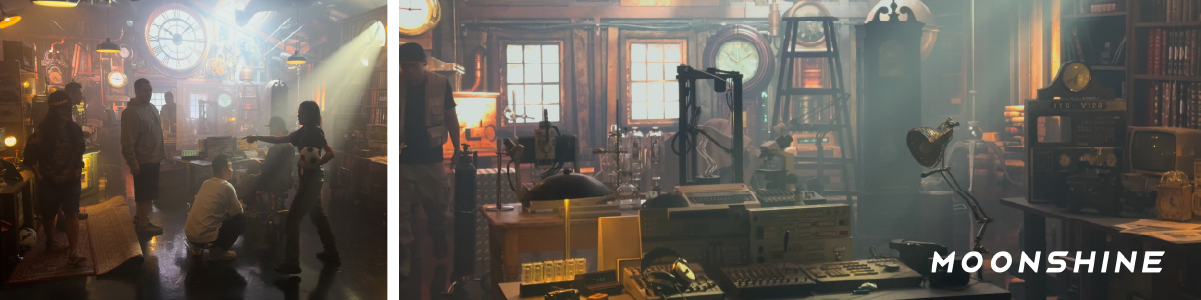
In the past, we were used to completing entire scenes inside a computer. But now, when you take those scenes and place them into a virtual studio—bringing them into the real world and blending them with a physical environment—the impact is completely different. It’s like creating 3D in real life, and that feeling is truly special.
Of course, this path isn’t for everyone. In our industry, the ultimate dream often points toward filmmaking or working in drama. If you’re passionate about visuals, virtual production opens a new route—one that could very well lead to a career in directing films or series in the future.
🔗 XR Studio Address: No. 45, Ln. 515, Sec. 1, Datong Rd., Xizhi Dist., New Taipei City 221005, Taiwan (R.O.C.)
🔗 Phone Number: 02-27857037
🔗 Official Website, Facebook, Instagram
🔗 Email: info@moonshine.tw
🔗 Official Website, Instagram, Facebook, LinkedIn, Youtube
🔗 Email: mars-partnership@vive.com
#MarsInsights #StudioSpotlight #VIVEMars #MoonshineStudio #BusinessApplication #CommercialShoot #LEDVirtualStudio #VFXCompany #Virtual Production #Virtual Production #HDRTechnique


